

Bourbon From Nowhere Is DeFinitely Going Somewhere
French oak meets American bourbon in Hawke’s Bay. Delicious.

I like winemakers, and I especially like finding out what the drink when the harvest is done and the ferment is slowly at work. It’s even better when they like drinking bourbon and talking about the creative concept of making something new from great components. They are usually thoughtful, well-informed and almost always unique in character, just like what they make. And they always have personality.
“I’m probably going to piss off both the Americans and the French in saying this,” Daniel Brennan tells me, with a particular sparkle in his eye that suggests he doesn’t mind a little cheek here and there.
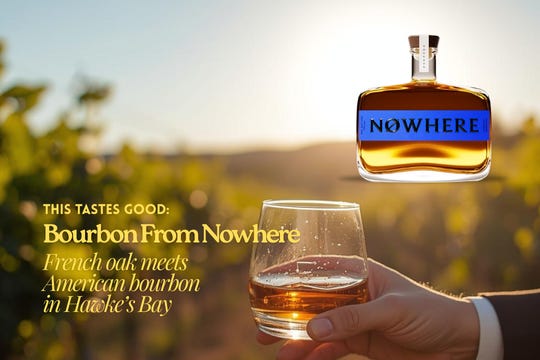
He’s talking about French oak. Specifically, French oak tannins in bourbon—angular, direct, spicy—meeting American whiskey’s fat vanilla roundness inside the decanter-like bottle of Nowhere bourbon. The globe explodes within this glass, along with some traditional ideas about how spirits are shaped and shape the world of flavour we experience. Nowhere Bourbon is new and distinctive, first arriving on my desk in late 2025, sparking plenty of curiosity until I finally sat down with the team.
Nowhere is bourbon, and a little bit more. An elevated expression of what bourbon has traditionally been and what happens when a winemaker gets hold of it with disciplined restraint and some very specific ideas about oak.
The bourbon inside Nowhere was made in southern Indiana by a distiller named Wilbert Best, who also makes wine. He’s a little mad scientist, a little distilling genius. It crossed the Pacific, arrived in Hawke’s Bay, and finished its journey in French oak that previously held Brennan’s Decibel Pinot Noir.
I promise you, this story is more than just another craft product on the market. It’s about a philosophy on making good spirits, seizing opportunity and exploring the bourbon landscape against the backdrop of New World Whisky* and wine. A frontier of expression and exploration with plenty of personality.
Not Everything From New Zealand Should Be Mashed Together
Sometimes good ideas start with not so great ones.
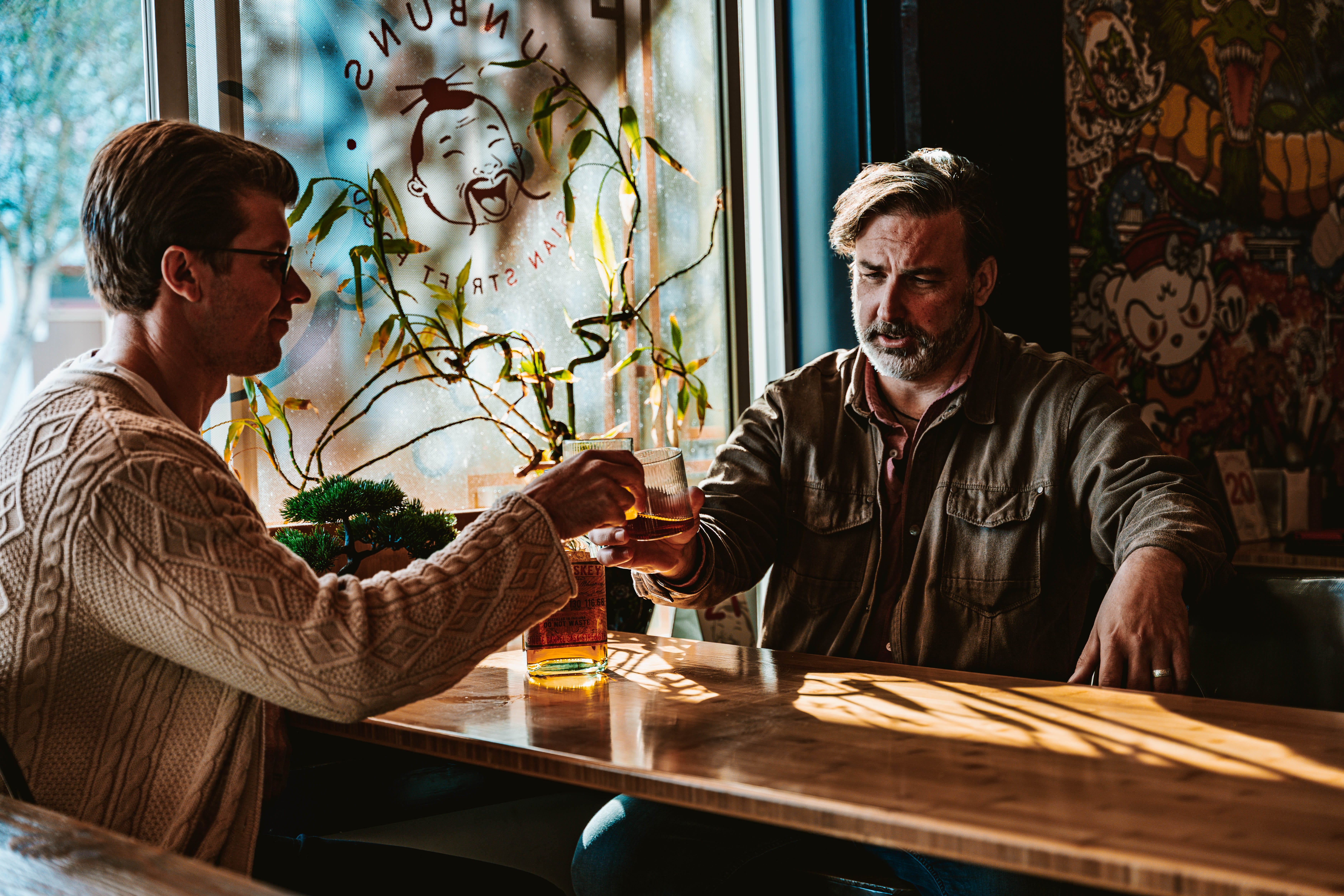
The Nowhere story begins with manuka honey and family. Enter Zach Gustafson’s father-in-law, who approached Daniel Brennan with surplus honey and supply chain issues left over from COVID. “What about making a honey whiskey?”
Daniel wasn’t initially enticed, but he’s pragmatic. “I know he’s a smart guy and he does his research. So I said, go ahead and have a look at where the honey whiskies are on the shelf.”
A month later: “Man, they’re all pretty bad, and they’re pretty cheap, and they’re not doing too well out there in the market.”
“Yeah,” Daniel said. “But we should look into bourbon.”
New Zealand has a bourbon problem. “I just kept cringing at the fact that people think bourbon in New Zealand is just about the bourbon and coke RTD cans,” he says.
“Bourbon is completely underserved in New Zealand,” Daniel says. He grew up in a bar in Philadelphia. Bourbon was a big part of the portfolio there. Every time he visited home, there were new and interesting bourbons behind the bar. The contrast with what he could access in New Zealand was stark. New Zealand is the highest per capita consumer of Jim Beam globally. We’re not talking about bourbon appreciation. We’re talking about a category dominated by RTD consumption, where bourbon exists as a delivery mechanism for fizzy sweetness rather than as a spirit worth contemplating.
Back in the US, American craft spirits have exploded over the last 15 years with explorations into grains, cask play and maturation styles flooding the market with good quality and interesting styles of spirit. Daniel had been watching bourbon explode in North America while travelling for Decibel wines—his biggest market is the US, while facing ongoing frustration at limited shelf selection here in New Zealand.
Bourbon’s footprint in Australia and New Zealand is growing steadily, but New Zealand presents a challenge: demand for bourbon and rye is increasing again as classic whisky cocktails find prevalence at the bar but more premium bottles are only available in small numbers moving ever so slowly off the shelf. There’s a taste for bourbon, but not enough variance or drive to move the category forward.
So maybe not honey whisky, but bourbon, he thought. That’s worth a crack.
And where does Zach fit in? Well, he and his young family had also made the move from the US to Hawkes Bay, so an introduction between the two was only a matter of time. Some might say perfectly timed to help bring the Nowhere bourbon project together.
They started by bringing in other brands first via South Street Imports, learning New Zealand market dynamics in liquor before launching their own. For bourbon fans like myself, the arrival of Copper Still and Doc Whiskey, was quiet but rewarding. Last year, they picked up a swag of local spirits awards medals to add to the international gongs too.
“It was a good way to cut our teeth.”
Finding Wilbert Best
Meanwhile, the project to launch a premium bourbon that really suited and grabbed the attention of the New Zealand market was all go. At first when I read “Southern Indiana” on the label, I assumed the bourbon was coming from MGP—that Indiana giant producing bourbon for half the “craft” brands in America. So I asked the question and got a firm no. After all, why would a winemaker devoted to single vineyard expressions all of a sudden go bulk spirit?
“I’d realised so many of these ‘craft’ bourbons were all made at the same place in Kentucky or Indiana,” Daniel explains. “They might have two barrels of their stuff sitting up there. Not to take away from the quality, but to me, finding someone personal to work with was part of the adventure.”
Which is where we meet Wilbert Best. “I thought, oh, this is the perfect name for a whiskey maker. And the bourbon was good too.”
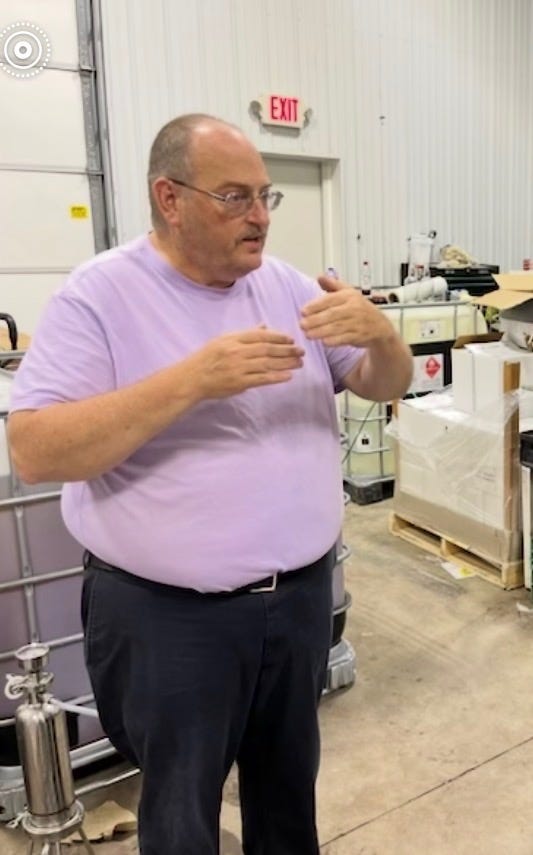
Best Vineyards Winery and Distillery in Elizabeth, Indiana is remarkably close to the Kentucky border with a vineyard established in 2000 and a distillery operating since 2016. “I’ll just say New Zealand’s definitely ahead of the winemaking from Indiana”.
But they were there for bourbon, not wine. In that, the location mattered: southern Indiana, close to the border and across the river from Louisville, KY offers the same great access to good soils, good grain and great water as some of bourbon’s greatest producers. It just looks and feels a little like the middle of nowhere, according to Daniel. Or maybe even further, according to me.
“It felt right. But I was wondering where the hell am I? Probably the opposite end of nowhere. But Wilbert was was really cool and very authentic and even a little questionable but in a good way”, Daniel says with a grin. You start to get a sense of the personalities ringing Nowhere Bourbon to life.
The plan was relatively simple, to begin with. (We’ll get to execution).
Source gorgeous spirit, bring it to New Zealand and finish it in Daniel’s Decibel wine casks. A marriage of skillsets, spirit and cask. A unification of two great products, each characterful with place and provenance. Get it to market. Solve the NZ bourbon problem.
Salt and Pepper, Not a Whole Meal
Of course, nothing is quite that straightforward. Craft takes knowledge, skill and time. Daniel Brennan is a winemaker. This matters more than it might seem.
Building a sustainable and internationally recognised career in winemaking is no small feat for a boy from Philly. Born into a Sicilian-Irish Philadelphia family steeped in hospitality, his winemaking style has evolved to bring New World willingness to try and Old World skill and sensibility together. He says his wines aren’t about mass-market appeal, instead they’re meant to be expressive, distinct, and interesting. He works with a range of small-scale grape growers, using a variety of fermentation techniques to explore what stories the wine can tell of place.
Unsurprisingly, this same approach comes across to the finishing of Nowhere Bourbon.
When he started thinking about finishing bourbon in wine barrels, he had advantages most bourbon-makers don’t: his own actual wine barrels. But more importantly, he had a winemaker’s discipline about intervention. About knowing when enough is enough.
“I’d rather be understated and safe and just let the process and product speak for itself.” This is not common thinking in a spirits landscape where barrel finishes can be heavy-handed, where more is often confused with better.
He chose Pinot Noir barrels specifically—from 2020 and 2021 vintages—steamed clean. Not Malbec, not Syrah, nothing with heavy tannins that would overpower. The winemaker’s knowledge shows in the details: “Spirits will penetrate the oak a lot more. They’re going deeper into the pores and into the staves. It’s going to pull out some extra tannins from the oak itself.”
French oak, specifically. Which is where the pissing-off-two-nations comment comes in. “American oak tannins are more like fat and vanillas and coconuts. French oak—which is why it suits New Zealand wine so much—they’re more direct tannins. You could literally look at them under a microscope and they’re like a little bit more angular. So they add like a little more spice.”
The result: softness up front from the Pinot influence, then that angular spice finish from the French oak, layered over the bourbon’s inherent richness and the 21% rye in the mash bill.
“So dare I say some American bourbon is clashing with some French oak and I can piss off two nations at the same time. But I think everybody here in New Zealand will be real happy with it.”
The finishing time was carefully monitored. Weekly tastings. “This is just going to be like a finishing touch, maybe just a little salt and pepper on it. The bourbon itself, we knew it’s a beautiful product already. We didn’t really want to muck it up too much.”
Threading the Needle
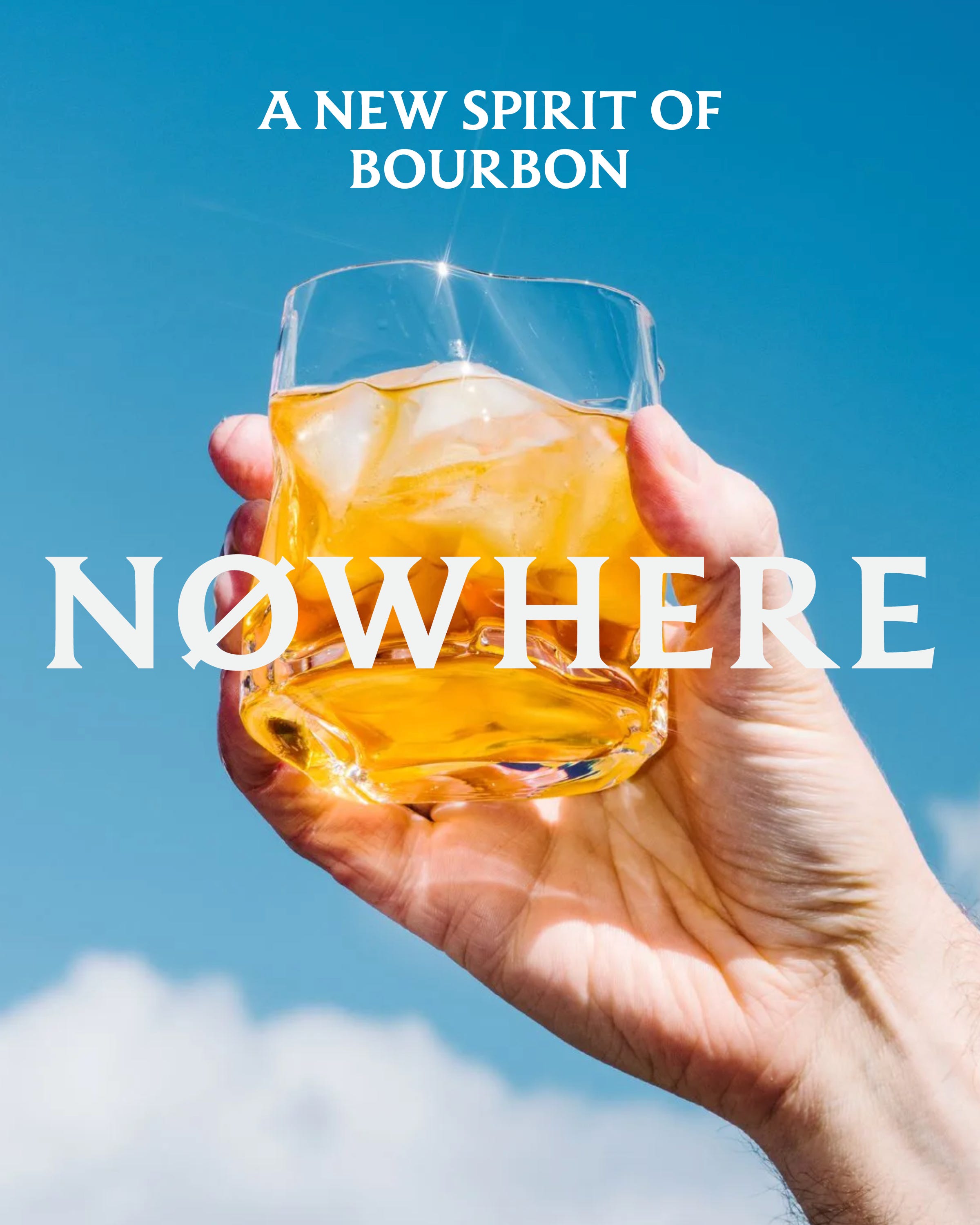
Zach is direct about their positioning: “We know bourbon is not a big market. Doing a wine barrel finish in bourbon is something that’s not super popular, so all of it’s like a bit of an entry point.”
Everything about Nowhere is calibrated to be approachable without being simplistic. The rye influence is just enough to balance and add depth but nothing with too much attitude. “It’s got a little bit of spice but not something that’s gonna burn their face off.” The wine finish? Present but not overpowering. “If someone is kind of just getting into these finishes, it’s good for that.”
They use the term “threading the needle” repeatedly—appealing to whiskey nerds while staying accessible to bourbon newcomers, creating something distinctive without being alienating, premium but not absurdly priced. Finding the narrow space between two rigid ideas.
“It’s got like a little Kiwi twist without being inauthentic with what it is,” Zach says. They’re not calling it Hawke’s Bay whiskey. It’s bourbon, made in America, finished thoughtfully in New Zealand.
The real consumer test came at Barrels by the Bay in Tauranga last year. Daniel gets animated describing it: “People who liked Scotch and knew Irish whiskeys but really hadn’t had a quality bourbon at all. They were tasting the bourbons and just being immediately blown away. Hey, bourbon can be this good, you know. You just haven’t experienced it.”
“They were like, what the hell?” The realization that bourbon could have this kind of complexity challenged assumptions for many. For Scotch drinkers, wine cask finishes are increasingly common and growing in popularity. And a lot of New Zealand whisky makers use Pinot Noir barrels too. But bourbon and wine? “We can convert a lot of these people that love Scotch to just try this sometimes, based on that bridge.”
When I ask what Nowhere compares to, Daniel deliberately steps away from bourbon comparisons. “I’d almost want to step away from bourbon and maybe take some other spirits, like Irish whiskey or Scotch.” He references lowland Scotches—richer, less peaty—and premium Irish whiskeys with alternative cask finishes. The Green Spot finished in Château Montelena barrels is a touchstone. “That’s sort of a benchmark that we were trying to reach, and we’re getting there.”
What Comes Next
Nowhere’s journey to market took too long, both Zach and Daniel admit. Ocean crossings, customs delays, development time. “Definitely not an advantage for our bottom line,” Daniel admits.
But there’s a silver lining. “At the very least, the stuff isn’t getting any worse.” The bourbon still in barrel in Hawke’s Bay, aging through warm summers and cool winters? It’s developing character. Each batch will be unique.
Daniel’s already playing with the next evolution. “We’ve taken one old bourbon barrel and I put some Malbec in it. We’re going the opposite way now too.” They’re also collaborating with a local brewery, passing bourbon barrels over for a bourbon barrel stout. “Trying to put bourbon in different places that you might not see it in New Zealand,” Zach says.
This is the craft ecosystem story New Zealand hasn’t fully realized yet—the cross-pollination between distilleries, breweries, and wineries that’s been happening in the American Pacific Northwest for years. Barrels moving between producers, experiments building on experiments.
They’re pragmatic about timing. “Maybe not the world’s greatest time to launch a spirits company,” Zach acknowledges. “There’s a lot of industry headwinds right now.”
Still, there’s opportunity in the underserved market. “If we were trying to sell them a new gin, I don’t think they’d give us the time of day. But bourbon is just somewhat of an underserved market where there’s a little more of a conversation to be had.”
“We’re really trying to focus on New Zealand and not trying to mimic the US,” Zach says. But they watch what Mitcher’s is doing—”pushing the premium bourbon desire, which helps all of us build out that market.”
Recently joining the portfolio of Wag & Co, they’re set for growth in bars and retail this year.
The Philosophy of Nowhere
I’d usually want to challenge the brand promise associated with the word ‘Nowhere’, but there’s something satisfying about bourbon made in Indiana (not Kentucky), finished in New Zealand (not America), with French oak (not American), by a American winemaker (not a distiller), that pushes the existing boundaries of how we understand New World categories.
Nowhere as concept. Nowhere as the productive, creative space between certainties.
“We’re borrowing the best from all cultures and ending up with something that elevates the experience as a whole,” I tell them during our conversation.
Daniel immediately responds: “We’re gonna steal that.”
They’re welcome to it. Because that’s exactly what they’re doing—not pretending to make New Zealand whiskey, not over-claiming the wine connection, not cosplaying American craft distilling. Just making something good with intelligence and restraint, letting the process speak for itself in the end result.
The bourbon inside Nowhere is beautiful already, Daniel keeps saying. They didn’t want to muck it up or over-complicate it. Just adding that salt and pepper. That little extra dimension of finesse and seasoning that elevates it to something unique.
“We’re seeing a lot of that with my wine peeps and friends who taste it,” Daniel confirms. “They like good spirits, maybe they don’t know that much about bourbon. Right away they’re like, oh yeah, give me a bottle. I got a gift lined up for myself.”
I tasted the Nowhere Bourbon for myself before I interviewed Daniel and Zach:
TASTING NOTE:
Full noise sweetness, vanilla and chewy toffee on the nose with a hint of milk chocolate. Big sweetness up front with complexity that suggests nuttiness and spice. Very smooth on the palate, mouthfilling with cinnamon and nutmeg. Traditional caramel notes of traditional American corn, creamy with a touch of minty herb from rye. The shape of the whisky is like a teardrop, sharp and sweet at the beginning and then a juicy drop that sinks into the palate. Roasted peanuts and fruit character soften the edges holding bold flavours in tension with complexity.
Nowhere Bourbon is available at select retailers and on-premise accounts.
www.nowherebourbon.com
*Whisky and whiskey are used interchangeably in this story to best reflect the provenance and style of spirit being discussed at the time.