

Going All In: How Pōkeno’s Alchemy Proves New Zealand Whisky Can Be Bold, Complex, and Affordable
A conversation with Pōkeno's Matt Johns about blending ambition, patience, and precious stock into something worth waiting for.

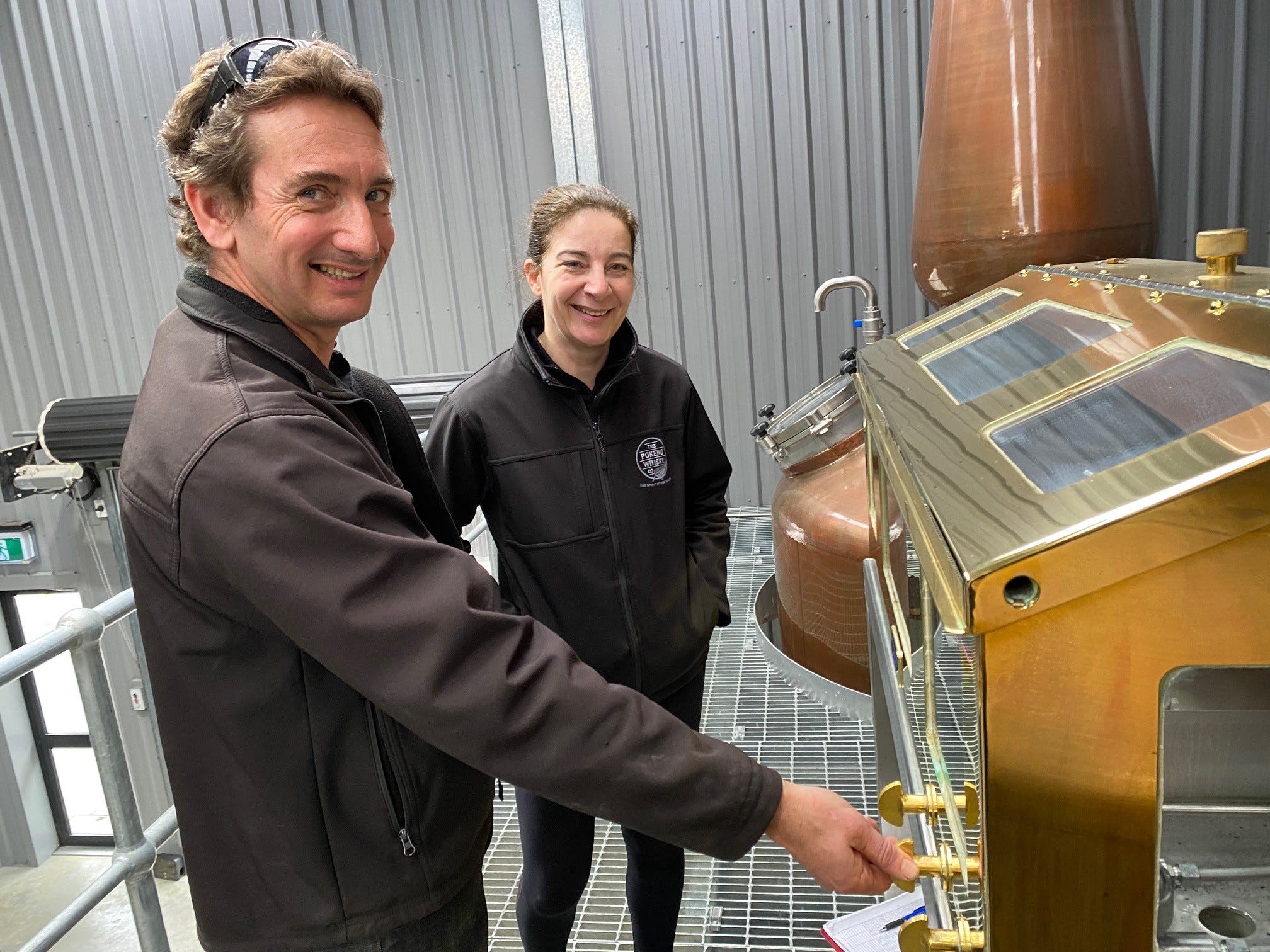
Matt Johns is mid-sentence about 30-year-old sherry butts when a guy on a motorbike rolls up to the Pōkeno distillery. Apparently this happens every four months—a UK-based fan who occasionally lives somewhere in New Zealand, rides around and pops in unannounced to say hello. There’s no question that we pause our conversation and it’s a nice reminder that behind every savvy piece of branding, the customer relationship will always take priority. After a quick hello, Matt returns to our chat about some of the oldest and most precious casks in the warehouse.
“The 30-year-old sherry butts were really interesting because they gave us a dried fruit, but not a massive PX (Pedro Ximénez sherry) influence,” he says. “So it accentuated the fruitiness of our natural grapefruit, orange, lemon, but it didn’t bring as much of the PX as I might have expected. It gave more of a dried fruit, figgy notes to it, which I would have almost associated with an old red wine cask.”
Pedro Ximénez casks usually offer rich, syrupy sweetness that accentuates molasses and chocolate in whisky, rather than the drier, nuttier effect of Oloroso cask maturation. But that’s typical in Scotland. What PX casks would do in the new world, in this instance Pōkeno’s humid and variable valley, was previously unknown.
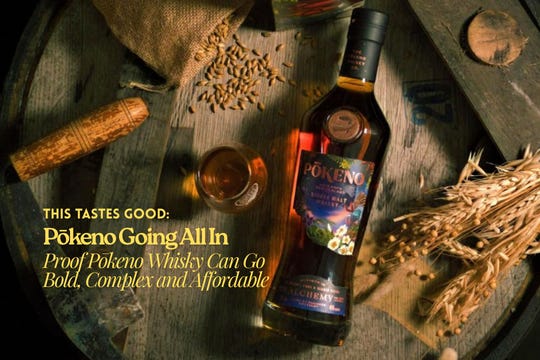
This is what we’re here to talk about: Alchemy, Pōkeno’s newest core range release. Three and a half years in the making, six different cask types, some of the distillery’s oldest stock.
Going All In
Matt has always been methodical about releases. The core range launched in June 2022 with Origin, a bourbon-cask expression designed to prove a point.
“I wanted to prove that we could make a really good whisky in New Zealand in a short period of time; because of the climatic conditions, because of the quicker maturation, and I wasn’t going to hide behind other barrel types,” he says. “That’s Pōkeno, that’s who we are. It’s our fantastically fruity, smooth, easy drink.”
Origin did its job. Discovery followed—a sherry-influenced sibling. Then came the Exploration Series for the truly experimental work, and single casks for the showcase moments. The initial core lineup was working, especially some of the single cask releases showcasing local beer collaborations and native wood.
But it came time to start looking at those stocks differently. My first visits to the site were clear: the Pōkeno team were filling warehouses full of ‘ingredients’, a wide variety of casks that would create options and discoveries of flavour. A catalogue of how the influence of the valley might collaborate with very old, very good cask stocks to produce blendable components.
“You’re going through the warehouse, you’re looking at your stocks, you’re looking at the range, you’re looking at what’s going on in the market,” Johns explains. “And I think as a brand, we’re evolving more and more to the fact that we always said from the start that we’re very proud of making New Zealand whisky in New Zealand, that we’re not making a Scotch whisky in New Zealand.”
The idea started percolating: what if they went all in? Not just on New Zealand provenance, but on complexity, boldness, a showcase of everything Pōkeno hadn’t yet released. And put it into core range product.
“I’d never gone in for that big, bold, massive product before,” Johns admits. “And we’d got some feedback from people saying, ‘When are you doing a sherry bomb? When are you doing this?’ So I’m looking at the stocks, going, ‘Okay, well, if I’m going to play around with something, we’re going to go big, we’re going to go bold, and we’re going to go creative—not only on the product, but on the packaging as well.’”
He had to wait. Some of the casks he wanted to use were good, but they’d be better with more time.
How Alchemy Got Its Name
The name came from an odd place. Johns and his team were talking Weta Studios, discussing making casks for a film set. Someone mentioned Lord of the Rings. Wizards. Potions.
“I kind of went, ‘Ah, potions, wizards, Alchemy,’” Johns recalls. “And I’m thinking blending, the art of the old school... Hold on a second, there might be something here.”
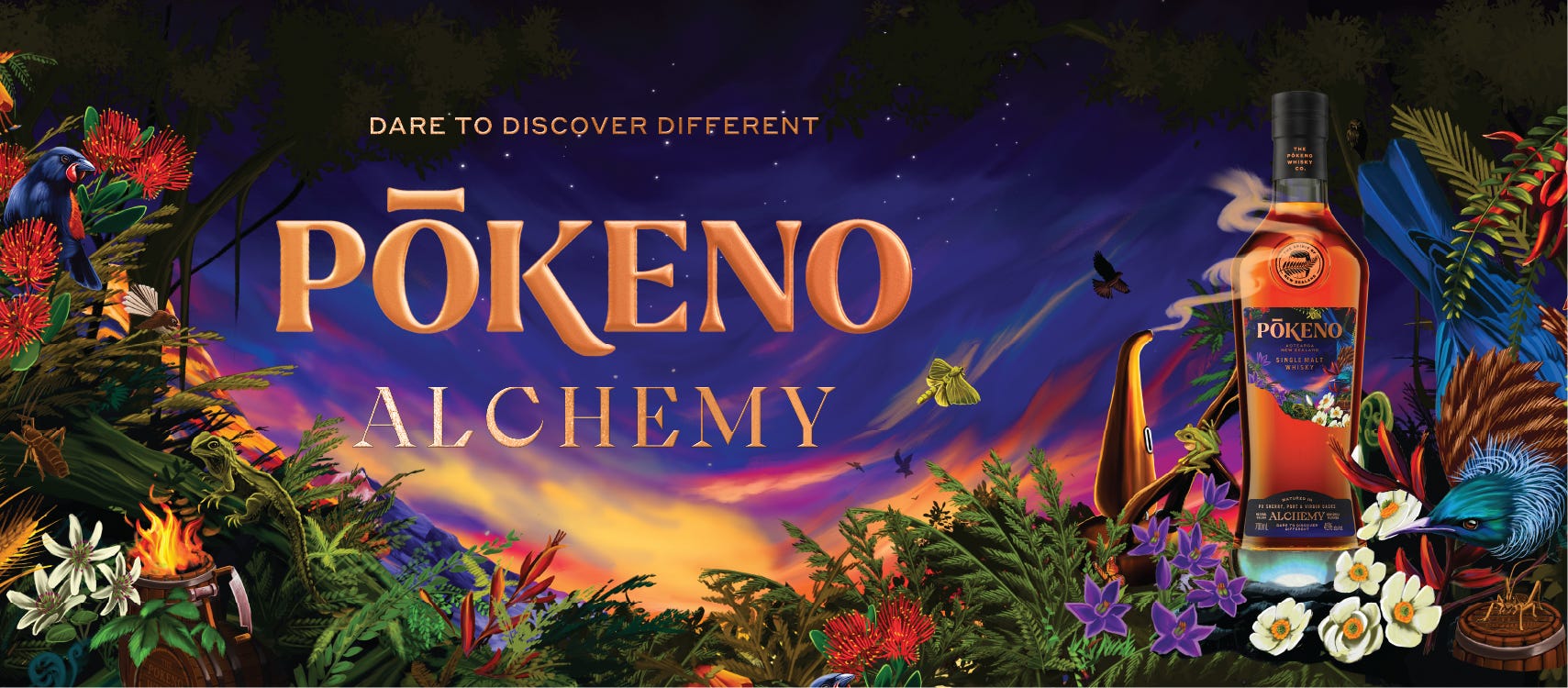
Then he was in Dunedin, looking at street art, and something clicked. The aesthetic, the vibe, the sense of creative alchemy—it melded together. They brought in a Japanese-Kiwi street artist for the packaging. The result looks nothing like traditional whisky, which is the point.
The liquid is where it gets technical. Six cask types: 15-year-old PX hogsheads, 30-year-old PX butts, tawny port, ruby port, light toast virgin American oak, medium toast virgin American oak. Some of the stock is over five and a half years old—ancient by Pōkeno standards. All full maturation, no finishing shortcuts.
“This is not something that we’ve gone, ‘F**k, we need to do this product, we’ll stick stuff in for finishing and shortcut it,’” Johns says emphatically. “This has been full maturation, all of these different cask types, and we had to wait until we had enough stock coming on board in the next two years to be able to maintain the product if we’re going to launch it.”
How Six Casks Work Together
The challenge was making six strong personalities play nicely together. The 30-year-old butts brought depth but risked going flat—”almost like when you have a Bordeaux which is a bit overaged, which is going on that serious kind of side, maybe a bit too woody,” Johns explains. The 15-year-old hogsheads provided the vibrancy—”that fresh bang of PX fruitiness, the ripe cherries, the Black Forest gateau, everything you’d expect.”
They couldn’t use just the butts. “There was depth coming from the butts, but I needed the vibrancy from the hoggies.” The blend uses more hogsheads than butts because “the dried fruit can be overpowering, and I lose the vibrancy.”
Then came the virgin oak—light toast for body without excessive spice, medium toast for “lovely caramel, biscuity butterscotch.” And finally, the port, pushed to 20% of the blend.
“It was really interesting for me that the port shows at the back end,” Johns says, still sounding somewhat mystified. “At the start, I was going, ‘Wow, I just can’t get the port to show,’ but it shows at the back end... You get right to the end of the product and the finish, and it’s almost pure port. The last thing—you wait for the first five, ten seconds, then the back end is almost pure port.”
As I finish this story, I can’t help but agree.
Matt’s approach to blending is that of storyteller and architect. He wants the blend to be harmonious in how it works together but he’s laying out a beginning, middle and end. The result is multi-dimensional in a way that demonstrates the intentionality of the blender. There’s a real journey going on.
“For me, the product is multi-layered,” Johns says. “You’ve got the PX, but the port really kicks in at the end. The virgin gives it the body, the PX gives it those notes everybody’s looking for, but the port gives it the length of the back end and that additional layer of fruitiness.”
With some of Pōkeno’s oldest stock, multiple expensive cask types, and significant investment in packaging, the question of approachable pricing must be asked.
“We don’t want this to be a special edition selling at 250 bucks a bottle, which it could have been,” he says. “This is us continuing to give the consumer products which are affordable at a price point they can taste and drink, and trying to give something which people want to have on the shelves.”
The pricing sits in sharp contrast to some (not all) New Zealand whisky. There are two paths emerging — affordable price points for regular whisky lovers or premium pricing for collectors, gifting and the one-off purchaser. Matt is clear about which path Pōkeno is taking.
“You can sell anything to anybody once,” Johns says. “But if you want your brand to be drunk, tasted, enjoyed and bought again, make it accessible.”
When we talk about the broader industry, he comes back to this point repeatedly. As a New World whisky producer, how do you justify being double or triple the price of Scotland?
“They’re still buying the barley, they’re still buying the wood, they’re still laying it down for three years. Yes, they’ve got economies of scale, but they’ve still got all those processes and costs. How can we justify being double their price or triple their price? We can’t. There is absolutely no justification.”
He allows for a 15% premium based on smaller scale, longer fermentations, slower distillations, higher transport costs. “But you can’t multiply by three and go, ‘I’m a New Zealand whisky, buy me.’ Or ‘I’m an Australian whisky...’ And the Australians are worse than us at doing that.”
What Alchemy Tells Us
Since I first started writing stories about Pōkeno and tasting her young spirit, there’s been a sense of quest and adventure, an air of anticipation about what Pōkeno spirit can handle, what we might discover about our own whisky-making climate.
“What Alchemy has taught me is that my new make spirit can support heavier casks, which I wasn’t convinced it could at the start. It shows that our new make spirit, although it is fruity and light, is also robust because you’re still getting the fruitiness of Pōkeno through Alchemy even though it’s got all of those incredibly powerful casks blended into it.”
This matters for a young industry still figuring out its identity. At five and a half years, Johns was worried his bourbon casks were getting too woody, losing fruitiness, picking up “notes of woody spice which I wasn’t overly fond of.” But at six and a half, seven years? “This evolved again. That woody spice has gone, and we’re back on the fruits, but accompanied by butterscotch, caramel, some of the more Scottish notes.”
The climate remains a moving target. “Today we’re on a journey—in 20 years time, ask me the question if I’m still around, but we’re not far enough in that journey to really know what the climate’s going to do to us in the next five or six years.”
His advice to other makers: “I’d say never be afraid to make mistakes. I’m still throwing stuff into new casks today that I’ve never tried before, that I’ve got no idea what it will be like in four or five years time, but if you don’t do it, you’ll never know.”
He pauses, then adds: “I’m sitting here today looking at Alchemy going, ‘Thank God I filled those PX butts and those old port casks five, six years ago, because otherwise I wouldn’t be able to do this.’”
Native Wood: Not a Gimmick
We also talk about Pōkeno’s native wood program—specifically, how perception measures it as marketing or genuine exploration. “For me, it’s not a marketing gimmick,” Johns says. “If it was, I’d have brought out six different native wood casks already, and it would have been done, and you’d have a set, a series, it would have been a little kind of trunk and you could... but it’s not. For me, it has to add something to the product.”
So far, they’ve found one wood that works fantastically: Totara. They get enough to make ten casks a year. “We sell all the Totara we’ve got. A couple thousand bottles a year. It’s shipped around the world, and that’s it.”
The kauri took two and a half years to come good after initial disappointment. “Six months after filling the kauri cask, we said, ‘This is never going in a bottle, it’s shit.’ Two and a half years later, it came good.” They’ve got enough kauri for one more cask, which might be the last one ever if they can’t source more wood.
And then there’s the New Zealand oak story, which perfectly encapsulates the trial-and-error reality of making whisky somewhere new. They sourced heartwood, dried it carefully, made a barrel. Thankfully they filled it with water first, on Matt’s instinct just to check.
“It literally went like that through the wood,” Johns says, making a whooshing gesture. They tried again with different wood, being more vigilant about heartwood, no sap. Same result.
Deep dive into the problem revealed that robur oak in Europe takes 100 years to grow. In New Zealand, it takes 40. What makes our fast-growing climate great for pine is terrible for oak, which will make the whisky nerds go a-ha. Our European and Scottish colleagues are a hundred-plus years into the business, so they understand that nurturing your forests is as important as the barley when it comes to whisky-making.
“The structure of the wood is just not concentrated or tight enough to hold liquid. You will never have a New Zealand oak wood barrel. It’s impossible. But until we built two barrels, gone down that path and did it, we didn’t know that.”
Building a Category While Building a Brand
When we shift to discussing exports and market realities, Johns’ frustration with the current whisky landscape becomes palpable. Pōkeno is one of the few New Zealand distilleries genuinely moving volume internationally—they’re in 30 markets—but even that success comes with caveats.
“The world is not waiting for a New Zealand whisky,” he says plainly. “The world is not waiting for an Australian whisky, or a Japanese gin, or whatever. Markets are overstocked. Whether you’re talking about retailers, wholesalers, importers—everybody’s overstocked. The big brands are still pushing stock to market because they’ve got to report to the industry that their share price is performing, so they’re throwing incredibly aggressive commercial deals all over the place, which has widened the gap between New World whisky and scotch whisky.”
Two years ago, Pōkeno was a niche, interesting product that people were excited about. Now? “You’re a hard-to-sell. And when you’re a hard-to-sell, it means you get no focus, which means you sit on a shelf somewhere at the bottom of a little independent retail store, which nobody’s got a hope of seeing when they walk into the store unless somebody’s going to talk about it.”
The only way forward is liquid on lips, building customer by customer, old school. “A small business like ourselves can only do so much of that. We’re out there fighting the good fight.”
Next year, instead of focusing on 30 international markets, they’ll focus on five. “How do we build those five to be a real success story and make sure that we’re positioned for when the markets take off again?”
What It Actually Tastes Like
My first taste was in a liquor store, in one of those tiny plastic cups. Not ideal. At home, in proper glassware, with time: different story.
When I tell Johns what I think, I talk about the depth and complexity. “That classic Pōkeno new make, which is sweet, fruit forward, designed to have this light, expressive kind of bounciness—you described it as vibrancy—it still stays pretty true throughout the whole thing.”
I’m a Totara fan, partly for the story and knowing about the experiment, but also because that candy, tropical fruit, the coconut really sings through. With Alchemy, I went in wondering: will I be able to pull out the individual influences? How is the difference between light and medium toast actually playing out? How is it all blending together?
“For me, what’s most exciting about this is that it’s a showcase of blending. Taking these ingredients and creating something that offers much more than the sum of the individual parts. I’d still love to taste all the individual parts, because they’re doing such a lovely job. But the way the fruit develops and changes in the glass over time is probably what sings out most.”
Not a story about wood, even with six cask types. The length carries nice and big and juicy—doesn’t get too dry and velvety at the end, which I’d sometimes expect with that amount of those kind of velvet tannins, the syrupy nature of PX. It stays beautiful, long, juicy all the way through.
“It’s balanced, it’s long, it’s got complexity and depth. Straightforward words, but that’s what I’d hope for. It’s just delicious.”
And validating: here’s something that shows yes, we can have humid valley temperature fluctuation, things we’d expect to have certain impacts. But out of that can still come something very juicy, very sweet, with lots of pliability. “The intensity of its climate, its age, hasn’t stripped away. It’s added to. That’s really exciting.”
For the category, this feels like the most exciting development in a while. Not because it’s laced with sherry and port influence—though I naturally enjoy those things. But because pour it into a glass, look at it on a shelf, and there’s a sense of quality and a sense of “I’m going to enjoy this.” It’s a cask play that actually tastes really good.
Johns nods. “I think it’s important the consumer understands you can make a fantastic complex New Zealand whisky and still put it out there at a price point which isn’t crazy. And I think it’s important as an industry, that’s what we need to be doing. We need to recruit the consumer. We just need to show them what we can do and that we can stand up against anything else.”
It’s nowhere near the end of the journey, he’s quick to add. It’s a stage, a milestone. “We were ready to do that now, and then we’ll see what the next part of the journey looks like.”
Alchemy by Pōkeno Whisky, 46% ABV, RRP $149