

The Price Is Right... Until Your Position Isn't.
It's the positioning strategy that proves the value of a drink before the lid is cracked. So have you got the value you're looking for this Friday night drinks?

There is one conversation, rarely spoken between a consumer (us) and a producer (sometimes also us). It’s the question we ask implicitly and explicitly about every purchase.
”Is this drink worth it?”

In the world of drinks, for the better part of a decade, “made in New Zealand” or “made in Australia” functioned as a shortcut to premium. Provenance was positioning. The story of the place, the founder, the water source, the native botanicals — that was enough to put a $90 - $130 price tag on a bottle and expect it to move. And for a while, it worked, because consumers (we) were curious and the craft story was still novel.
That novelty has worn off.
Consumers haven’t become less interested in provenance — they’ve become more sophisticated about what it provenance actually means. Origin is a qualifier now, not a differentiator. It tells you something about what’s in the bottle; it doesn’t tell you why you should choose this bottle over the twelve others next to it on the shelf, several of which are also local, also handcrafted, also have a lovely founder story on the back label.
So when Meg Raynor, my former colleague in the big, bold world of brand, comms and marketing, gave a brilliant answer to the question of establishing value—I immediately asked if I could share it with you, as consumers and producers.
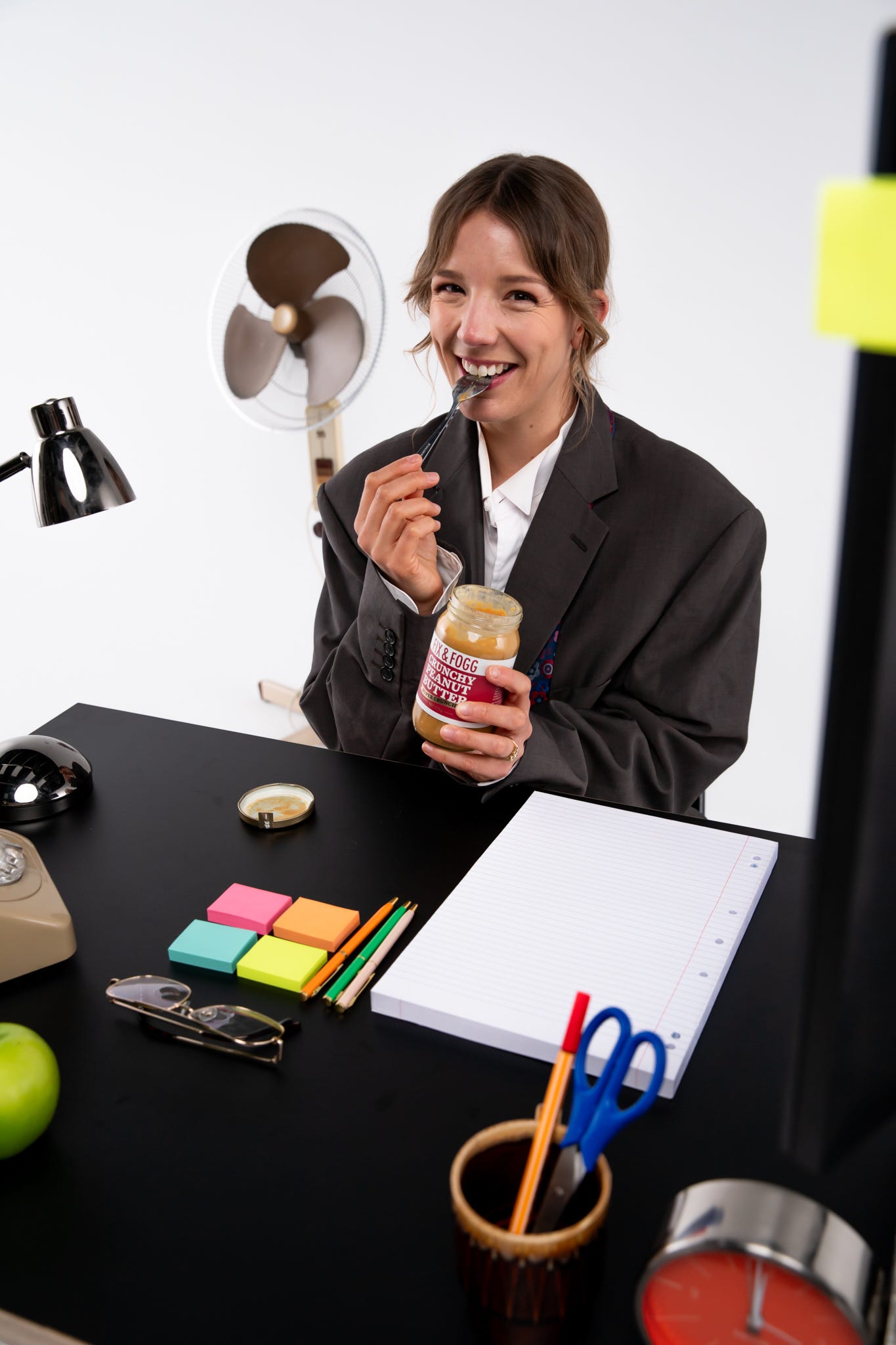
What Meg articulates here — and why I wanted to share it — is the thing sitting underneath that problem of value, especially in a cost-of-living crisis etc et al. Pricing is perception. Perception is built by everything a brand does, consistently, across every touchpoint, long before someone picks up the bottle. If your price says premium and your brand behaviour says uncertain, inconsistent, or just a bit beige and inauthentic, we feel the dissonance and mismatch even if we can’t name it. We put it back on the shelf.
If you’re looking for the TLDR; read this. Then read it again if you own a brand with a price tag you know you’re defending on the shelf.
Whatever your pricing is, has to be believable. If your pricing is premium, your brand had better be living up to it in every way.
In the drinks category specifically, “every way” means your bartender relationships, your off-premise shelf neighbours. Your social presence. The tone and consistency of your marketing comms. The way your rep shows up, if you have one. Whether you show up at all. The confidence — or lack of it — in how you talk about what you make. Consumers are reading all of it, all the time, and pricing it accordingly in their heads.
So enough from me (for now)… here’s another expert to help you navigate it and think about what you choose buy, why and what it means for your products.
Here’s why pricing is about the vibe
The price vs conversion conundrum.
May 17, 2026
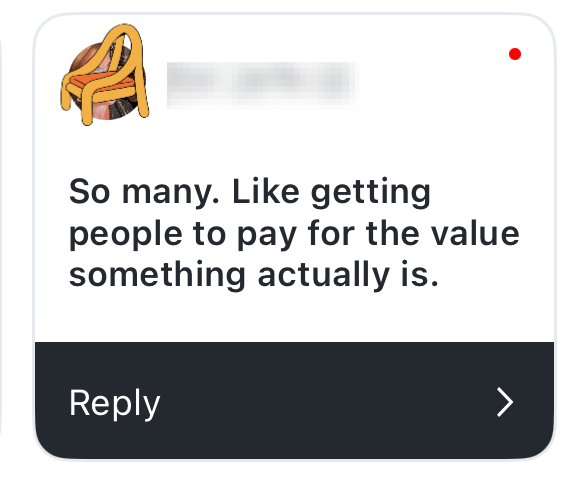
This is all about PosITionINg baby ✨
In your question, you’ve said: “for the value something actually is”. The thing is, people don’t pay the price it actually takes to produce or do something. They pay what they think it is worth. In other words, they’re paying for perception, not objection.
And the way to create the perception is through brand positioning.
For the non-marketing inclined, positioning is what you decide you want your brand to be associated with – and everything you do to reinforce that association.
Positioning answers the question of why you choose one product over another, when underneath the branding, they’re probably the same. For example, Apple vs basically any technically comparable product.
Apple has positioned itself as sleek, premium and innovative. Top of the class. Especially for creatives.
They do this through branding, product experience (even the unboxing feels lush), marketing, visuals, tone of voice, education about their benefits/tech (v important), and the in-store experience. All elements work together to make the product feel premium and therefore worth the price.
Not to get confusing, but even their pricing is part of the positioning strategy - by pricing Apple products at a premium, it implies that they’re of high value. They don’t even do sales.
Whereas if they started pricing on the lower end, people would distrust the products. Cheap pricing can actively undermine a premium perception.
This is why two near-identical products can exist side by side with wildly different pricing, and both still sell. They’re targeting their positioning to different audiences, and having the price to suit.
To try to distil this down into one simple piece of advice, if your pricing is premium, your brand had better be living up to it in every way. (sidenote: including customer service, though I know the asker has this nailed, so this advice is for everyone else)
There’s actual research behind this, too. Kantar found that 49% of pricing power comes from positioning. As marketing professor of Mini MBA (p.s would recommend), Mark Ritson puts it, positioning “gives you the ability to charge more as we harvest that demand.”
In short, as soon as people can’t tell the difference between you and the cheaper option, price becomes the deciding factor.
And if the value of your product or service isn’t perceived before the purchase happens, OR your positioning is not aligned with the price you’ve got on it, it’s an issue.
Capiche?
P.S. Some people will never ever ever (ever!) see the value in your offer or product. They are not your audience; it’s not worth trying to convince them. They can choose another brand.
Right, back to me. (Yes, Meg and I do make a good team).
Summary + Practical Applications
Meg’s framework is clean: positioning creates perception, perception justifies price, and price that outstrips perception loses every time to the cheaper option once consumers can tell the difference has disappeared. Kantar’s finding that 49% of pricing power comes from positioning isn’t surprising if you’ve spent any time watching premium craft spirits struggle at retail while a globally recognised but non-premium brand sits comfortably at a lower price point and turns over steadily. Here’s the shock: it’s not just price point that means people are flooding back to mid-priced and mainstream products. It’s decades of consistent positioning and consistent performance. The decision-making becomes effortless.
So what does this look like practically, in the drinks context?
For starters, it’s not just your price that has to be believable, but your brand too. Your brand needs a personality that consumers can actually feel — not just a story, a personality. Whether it’s fun, irreverent, elegant, authoritative, warm, a bit provocative - preferably somehow it draws you into actual engagement. Something consistent enough that a consumer who’s had one interaction with you could predict how you’d behave in another context. The brands that are winning right now — and this is as true in Australasia as anywhere — are the ones that feel like a genuine relationship, not a transaction. Consumers want to be in on something. They want to feel like the brand chose them back.
It also means your price point needs a support structure. Premium pricing without premium execution at every touchpoint isn’t bold, it’s just expensive. And what producers perceive as valuable is often miles apart from what consumers care about. The lush wooden boxes left scattered in the backroom of duty-free are testament to the example. And in a market where consumers are making increasingly careful choices about where their discretionary spend goes, “expensive without a reason” is a fast track to dusty bottle shoulders on the shelf and a conversation with your distributor about margin support.
For brand owners: the diagnostic question isn’t “is our product good enough to justify this price?” It probably is, I hope. The question is whether a consumer who has never tasted it could tell that from every other signal your brand sends. The trouble is, most people don’t understand the cost of a barrel, but if you’re going to ask them to spend hundreds on aged spirit, you need them to believe something in that bottle is worth it. If the answer is uncertain, that’s where the work is.
I want to know — how does your favourite drinks brand make you feel? Is it the confidence of a brand that knows exactly what it is? The elegance of one that never has to try too hard? The sass of one that makes you feel slightly in on the joke? Tell me in the comments — and if you’ve got a brand that you think is genuinely nailing this, name them.
For brand owners: Honest question: does your positioning and brand behaviour match your price point at every touchpoint? Not just the liquid, not just the label. Everything. And if you’re never considered that question before and you want to think it through when positioning is more important than ever? You know where to find me. And I know where to find Meg too.